
From cleaning city pipelines to emptying septic tanks and drainage pits, one key vehicle handles all the dirty work - the vacuum sewage truck.
But many people may wonder:
"How does it actually suck up sewage? Why not just use a water pump instead of all this vacuum stuff?"
Let's dive into both the structure and working principle to reveal the answer.
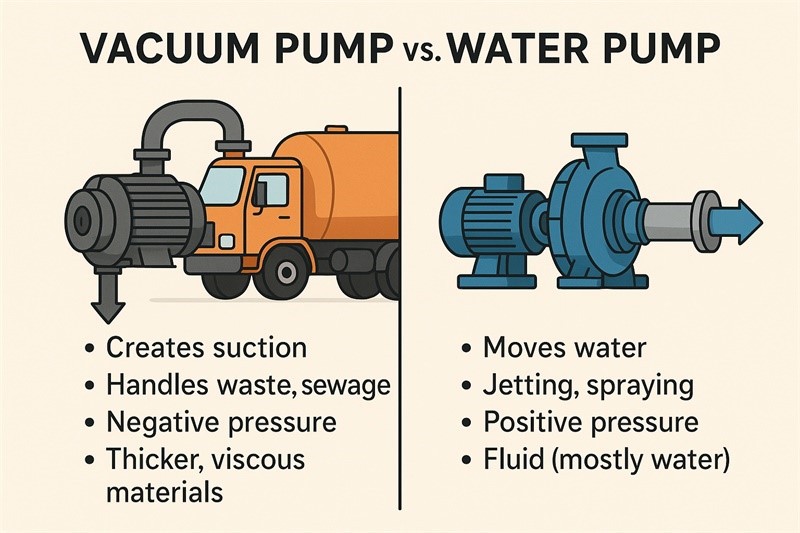
Sewage isn't clean water - it's usually thick, sticky, and full of debris, like:
Using traditional pumps like centrifugal or piston types often results in:
That's why vacuum sewage trucks take a different route - they use vacuum systems to "indirectly" suck up sewage.
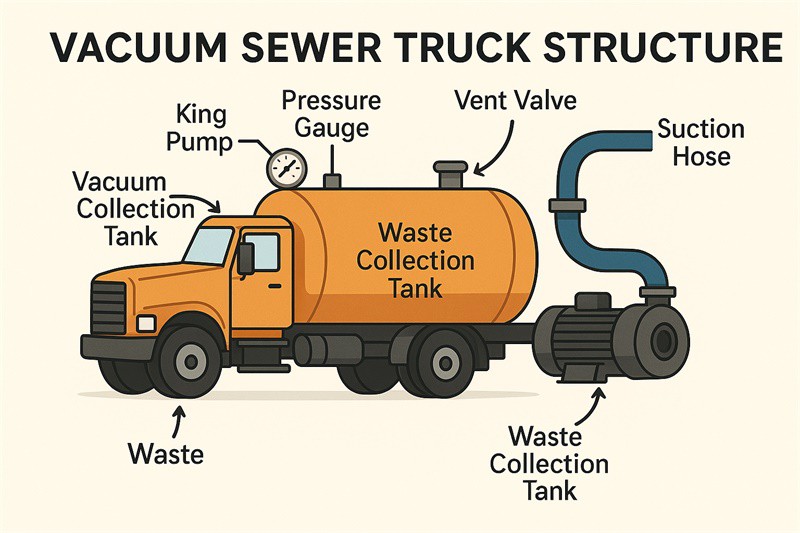
A vacuum sewage truck uses a vacuum pump + sealed tank system. The working principle is surprisingly simple yet highly efficient:
The vacuum pump starts by removing air from the sealed tank. This reduces the pressure inside, creating a vacuum.
Once the suction hose is inserted into the sewage and the valve opens, the outside pressure (atmospheric) is higher than inside the tank.
That's when air pressure pushes the sewage into the tank.
So in reality, the truck doesn't "suck" - it gets filled by external pressure!
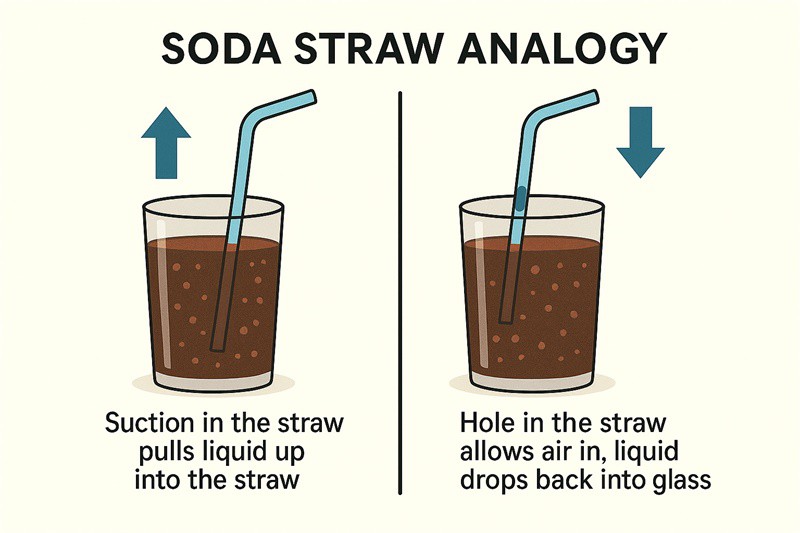
Think back to using a straw:
The vacuum sewage truck works the same way - except its "mouth" is a sealed tank with a suction hose.
| Comparison Point | Vacuum Sewage Truck | Traditional Pump System |
|---|---|---|
| Handles thick waste | ✅ Yes | ❌ Easily clogs |
| Contacts liquid | ❌ No direct contact | ✅ Direct contact |
| Failure rate | ✅ Low (minimal wear) | ❌ High (due to debris) |
| Suction distance | ✅ Up to 5–6 meters | ❌ Typically shorter |
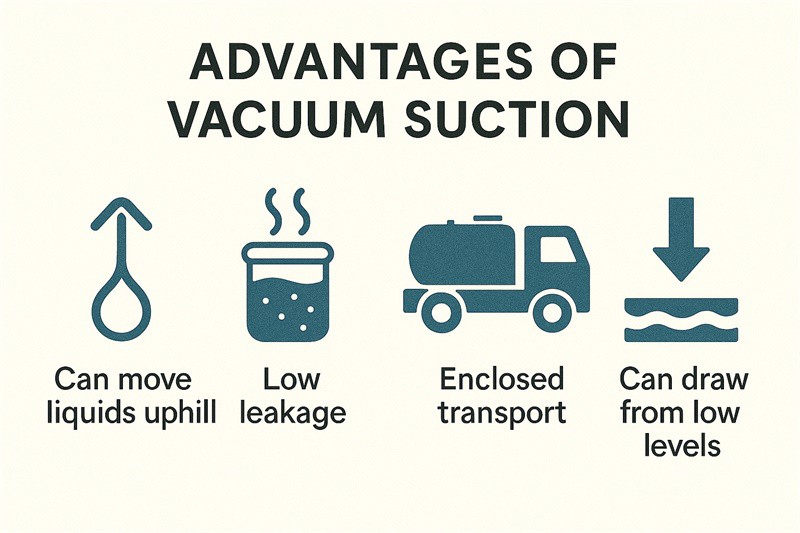
Vacuum sewage trucks don't rely on direct pumping. Instead, they create negative pressure in the tank, allowing atmospheric pressure to push sewage in - a smarter, cleaner, and more reliable way to handle heavy-duty waste.