
Fuel tank trailers are essential for transporting diesel, gasoline, and other liquid fuels over long distances. Depending on transport needs, these trailers come in one-compartment or multi-compartment designs. Here's how they differ:
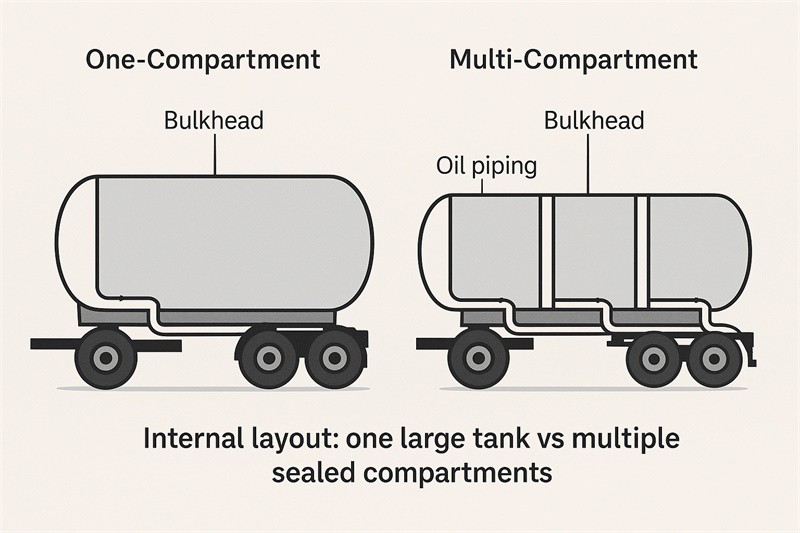
One-Compartment Trailer
Has a single large internal tank. All the fuel is loaded and unloaded together.
➤ Simple structure, easier to clean and maintain.
Multi-Compartment Trailer
Divided into 2 to 8 sealed compartments inside the same tank.
➤ Each can carry a different type or grade of fuel.
One-Compartment
Best for long-haul delivery of a single product in bulk.
➤ Example: 40,000 liters of diesel to one gas station.
Multi-Compartment
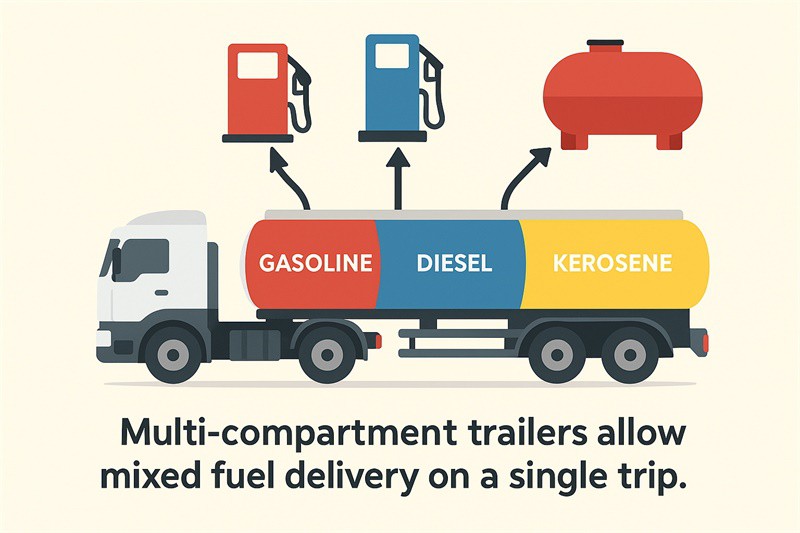
Ideal for distributing multiple fuels in a single trip.
➤ Example: Deliver 15,000L gasoline + 20,000L diesel + 5,000L kerosene to different stations.
Multi-Compartment trailers are more stable during driving.
➤ Smaller compartments reduce liquid surge, especially during braking or turning.
One-Compartment trailers are more prone to fluid sloshing, which may affect vehicle control.
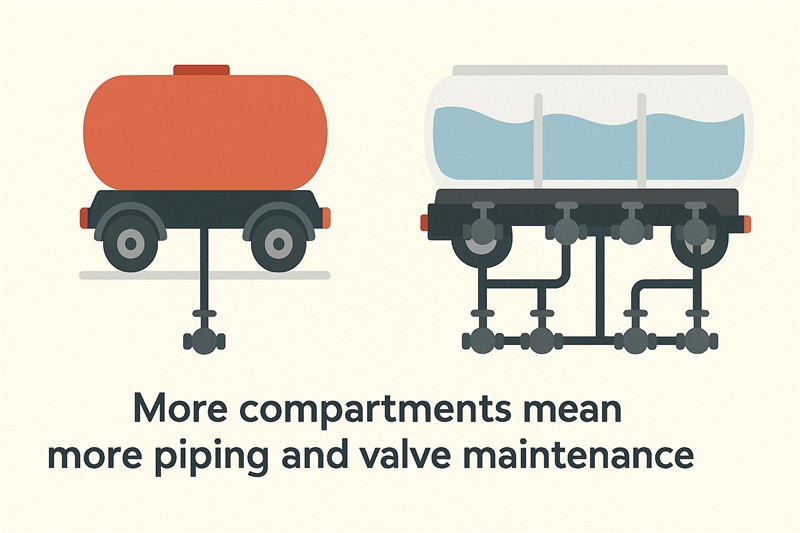
One-Compartment
➤ Lower cost, simpler piping and fewer valves.
➤ Lower maintenance cost.
Multi-Compartment
➤ Higher initial cost due to extra bulkheads, valves, and piping.
➤ Requires more frequent inspection and cleaning.
| Use Case | Recommended Type |
|---|---|
| Delivering a single fuel type in bulk | One-Compartment Trailer |
| Serving multiple fuel stations with varied needs | Multi-Compartment Trailer |
| Budget-conscious, simple logistics | One-Compartment |
| High-efficiency mixed delivery | Multi-Compartment |
| Feature | One-Compartment | Multi-Compartment |
|---|---|---|
| Structure | Single tank | 2–8 separate compartments |
| Fuel types per trip | One | Multiple (diesel/gasoline/etc.) |
| Efficiency | Best for bulk transport | Best for mixed delivery |
| Stability | Moderate | Better (less liquid surge) |
| Cost & Maintenance | Lower | Higher |