
When you see "30M Aerial Platform Truck" on a spec sheet, what does it really mean? Is the 30 meters the maximum working height? Or the platform's reach? Or just a marketing number?
Let's break it down with real-world factors that affect working range, safety, and actual usability on-site.
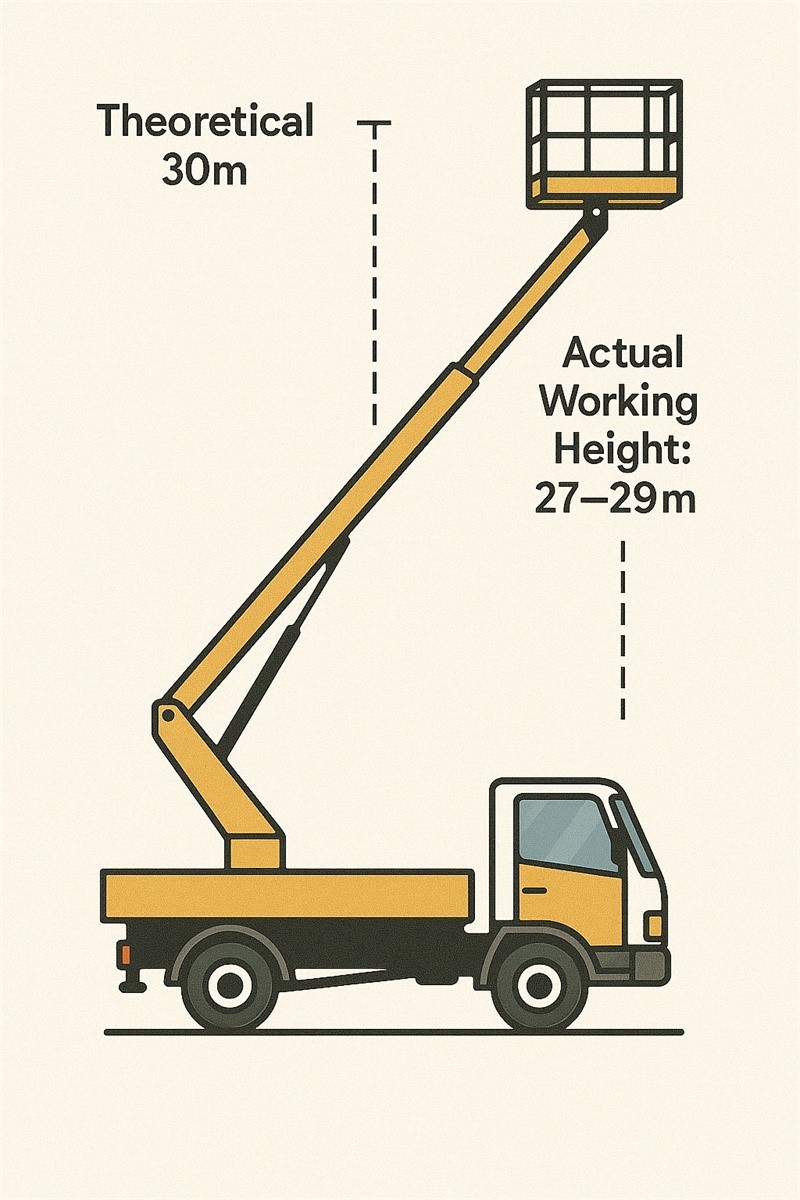
🔹 Rated height (30m) refers to the vertical distance from the ground to the topmost point the platform could reach under ideal conditions.
🔹 But real working height is usually 1–2 meters lower, especially when accounting for safety margins, platform load, and boom angle.
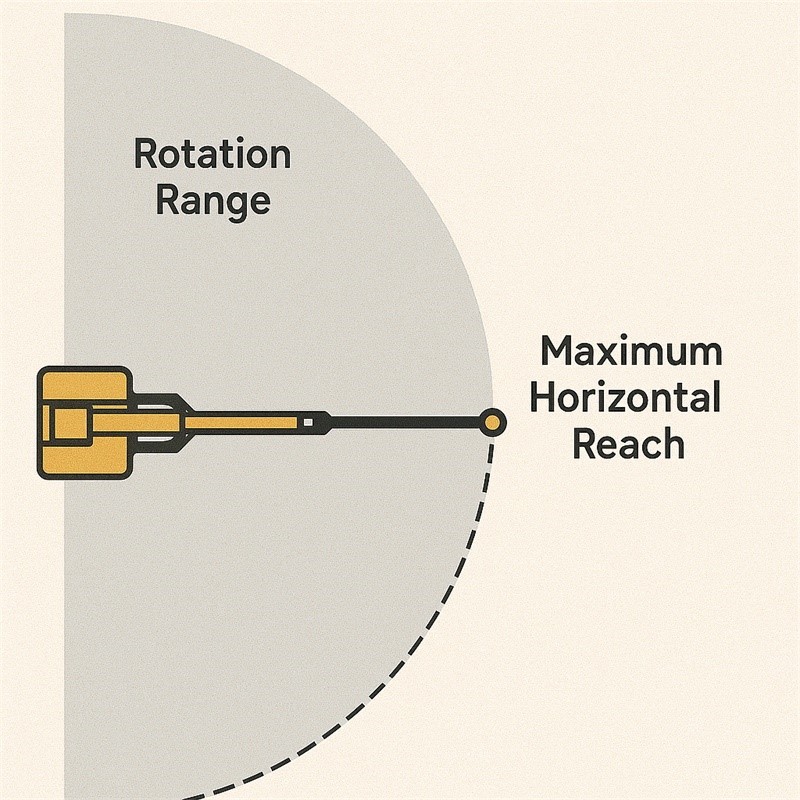
A 30-meter height doesn't help much if your truck can't reach sideways.
🔸 Rotation angle (usually 360° continuous or ±90°) determines flexibility
🔸 Horizontal outreach may vary from 12 to 20 meters, depending on boom sections and angle.
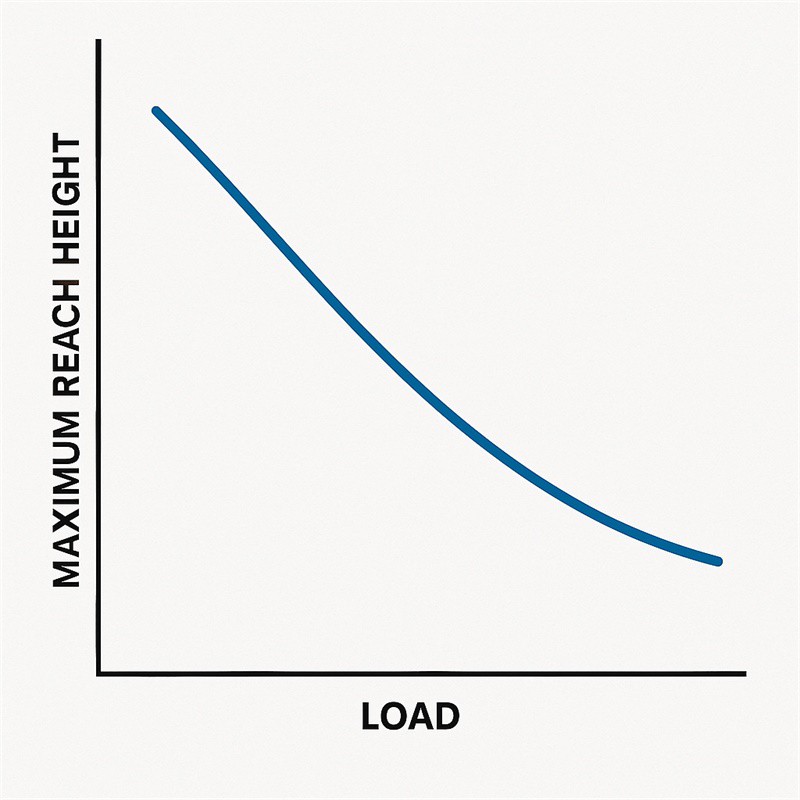
Most aerial platforms are designed for a specific safe load capacity (e.g., 200–300kg). Exceeding this can trigger safety limits, reducing boom extension or even disabling height functions.
🛑 A full extension to 30m may only be possible at partial load.
In real jobs - uneven roads, slopes, or curbs - your "working height" is also influenced by:
Outrigger deployment limits
Truck tilt (even 3° can shift boom angle)
Terrain clearance
Before purchasing or renting a 30M aerial platform truck, check:
Actual working height under full load
Horizontal outreach and rotation limits
Load-sensitive boom extension data
Terrain adaptability features (self-leveling, outrigger span, etc.)