


Hey there! I'm in the garbage truck business, and I often get asked, "Do garbage trucks contribute to air pollution?" Well, let's dig into this topic and see what's really going on.
First off, it's no secret that vehicles, in general, are a source of air pollution. Garbage trucks are no exception. These big beasts are on the road all day, collecting trash from neighborhoods, commercial areas, and everywhere in between. They burn fuel to run, and that fuel combustion releases a bunch of pollutants into the air.
The main culprits are things like carbon monoxide (CO), nitrogen oxides (NOx), particulate matter (PM), and hydrocarbons. Carbon monoxide is a colorless, odorless gas that can be really harmful if you breathe it in. It reduces the amount of oxygen that can be carried by your blood, which can lead to headaches, dizziness, and in severe cases, even death. Nitrogen oxides are a group of gases that can cause respiratory problems, especially for people with asthma or other lung conditions. They also play a role in the formation of smog and acid rain. Particulate matter consists of tiny particles that can get deep into your lungs and cause all sorts of health issues, from coughing and wheezing to more serious long - term problems like lung cancer. Hydrocarbons are another pollutant that can contribute to the formation of smog.
Now, garbage trucks have some unique factors that can make their pollution contribution a bit different. For one, they often have to make a lot of stops and starts. This stop - and - go driving is really hard on the engine and can lead to more fuel being burned inefficiently. When an engine is constantly starting and stopping, it doesn't have a chance to reach its optimal operating temperature, which means it burns fuel less cleanly.
Another thing is that garbage trucks are usually heavy. They're carrying around tons of trash, which means the engine has to work harder to move the vehicle. The more work the engine has to do, the more fuel it burns, and the more pollutants it releases.
But it's not all bad news. The garbage truck industry has been making some great strides in reducing air pollution. There are now a lot of new technologies and designs that are aimed at making these trucks more environmentally friendly.
One of the biggest advancements is the use of alternative fuels. For example, some garbage trucks are now running on compressed natural gas (CNG). CNG burns cleaner than traditional diesel fuel, producing fewer emissions of carbon monoxide, nitrogen oxides, and particulate matter. It's also a more abundant and domestically available fuel source, which is a plus for energy security.
Hybrid and electric garbage trucks are also becoming more common. Hybrid trucks combine a traditional combustion engine with an electric motor. The electric motor can be used for low - speed driving and when the truck is idling, which reduces the amount of time the combustion engine is running. This leads to lower emissions and better fuel efficiency. Electric garbage trucks, on the other hand, run entirely on electricity. They produce zero tailpipe emissions, which is a huge win for the environment.
In addition to alternative fuels, there have been improvements in engine design. Modern engines are more efficient and cleaner - burning than their older counterparts. They use advanced technologies like direct injection and exhaust gas recirculation to reduce emissions.
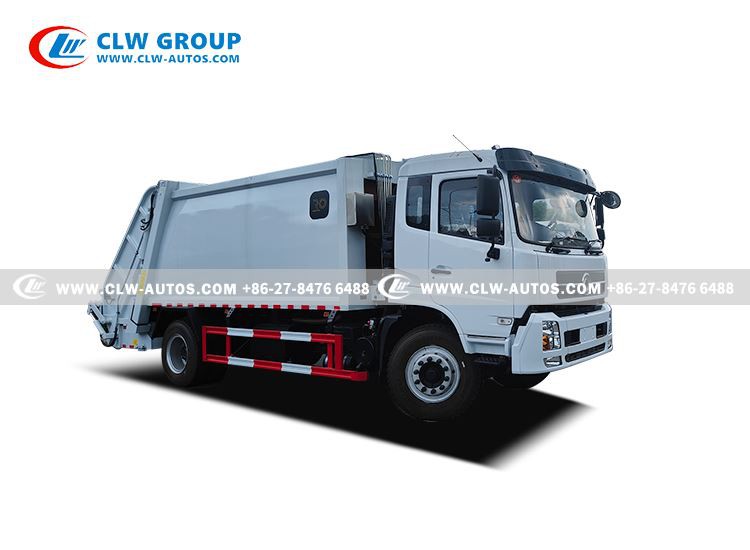
As a garbage truck supplier, I'm really excited about these developments. We offer a range of trucks that are designed with the environment in mind. For example, we have the Sinotruck HoHan 18m3 Compressed Garbage Truck. This truck is not only powerful and reliable but also has features that help reduce its environmental impact. It uses a state - of - the - art engine that meets strict emission standards, and it's designed to be as fuel - efficient as possible.
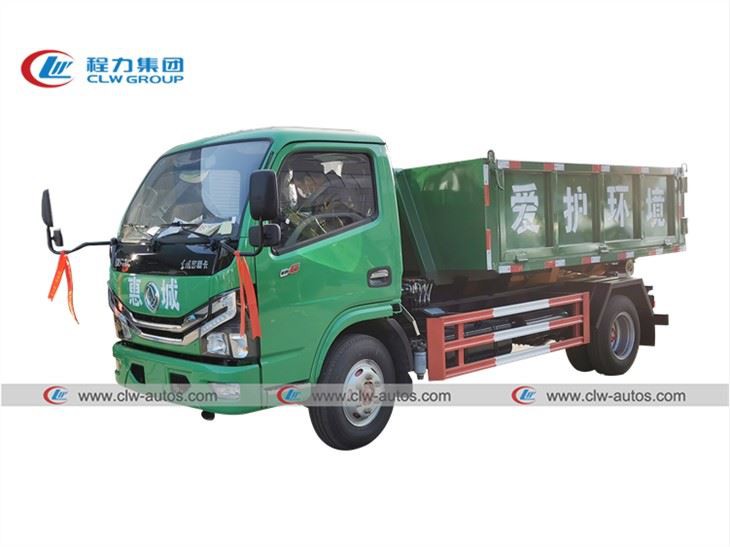
Another great option is the Tipping 8Ton Hook Lift Garbage Truck. This truck is built with durability and efficiency in mind. It can handle heavy loads while still keeping emissions in check.
And then there's the Donfeng 10tong Waste Compression Truck. This truck is a workhorse in the garbage collection industry. It has a powerful compression system that allows it to carry more trash in each trip, which means fewer trips on the road and less overall pollution.
So, while it's true that garbage trucks do contribute to air pollution, the industry is doing a lot to minimize that impact. And as a supplier, we're committed to providing our customers with the most environmentally friendly options available.
If you're in the market for a garbage truck, whether you're a municipality looking to upgrade your fleet or a private waste management company, we'd love to talk to you. We can help you find the right truck for your needs, one that balances performance, reliability, and environmental friendliness. Contact us to start the conversation about your garbage truck needs and let's work together to make our cities cleaner and greener.
References
- "Air Quality and Health Effects of Motor Vehicle Emissions." Environmental Protection Agency.
- "Alternative Fuels for Heavy - Duty Vehicles." National Renewable Energy Laboratory.
- "The Impact of Stop - and - Go Driving on Vehicle Emissions." Society of Automotive Engineers.