


LPG (liquefied petroleum gas) storage tanks play a pivotal role in various industries, from residential cooking to industrial heating. As a trusted LPG storage tank supplier, we understand the critical importance of ensuring the safety and reliability of these storage systems. One of the key aspects of maintaining safety is the proper installation and use of pressure relief devices. In this blog post, we will delve into the different types of pressure relief devices for LPG storage tanks, their functions, and why they are indispensable.
The Need for Pressure Relief Devices in LPG Storage Tanks
LPG is stored in tanks under pressure to keep it in a liquid state. However, several factors can cause the pressure inside the tank to increase beyond the safe operating limit. For instance, exposure to high temperatures can lead to the expansion of the LPG, resulting in a significant rise in pressure. Additionally, a malfunction in the filling process or an internal blockage can also cause pressure to build up. If the pressure is not relieved, it can lead to catastrophic failures, such as tank ruptures or explosions, posing a serious threat to human life and the environment.
Pressure relief devices are designed to automatically release excess pressure from the tank when it reaches a predetermined level. By doing so, they prevent the tank from over - pressurizing and ensure the safety of the entire storage system.
Types of Pressure Relief Devices
1. Pressure Relief Valves (PRVs)
Pressure relief valves are the most commonly used pressure relief devices for LPG storage tanks. They are designed to open at a specific set pressure and release the excess LPG vapor until the pressure inside the tank drops to a safe level. Once the pressure is back within the acceptable range, the valve closes automatically.
There are two main types of pressure relief valves: spring - loaded and pilot - operated. Spring - loaded valves are relatively simple in design. They consist of a valve disc held against a valve seat by a spring. When the pressure inside the tank exceeds the spring force, the valve disc lifts, allowing the LPG vapor to escape. Pilot - operated valves, on the other hand, are more complex but offer better performance. They use a pilot valve to sense the pressure and control the opening and closing of the main valve. This type of valve can provide more accurate pressure control and is suitable for high - pressure applications.
2. Rupture Discs
Rupture discs are non - reclosable pressure relief devices. They are made of a thin metal diaphragm that is designed to rupture at a specific pressure. When the pressure inside the tank reaches the burst pressure of the disc, it ruptures, releasing the excess pressure. Unlike pressure relief valves, rupture discs cannot be reset after they have burst. They need to be replaced immediately after activation.
Rupture discs are often used in combination with pressure relief valves. They act as a secondary safety measure, providing an additional layer of protection in case the pressure relief valve fails to operate correctly.
3. Fusible Plugs
Fusible plugs are another type of pressure relief device used in LPG storage tanks. They are made of a metal alloy with a low melting point. When the temperature around the tank rises to a critical level, the fusible plug melts, creating an opening through which the LPG vapor can escape.
Fusible plugs are mainly used as a safety measure against fire. In the event of a fire near the LPG storage tank, the heat can cause the pressure inside the tank to increase rapidly. By melting at a specific temperature, the fusible plugs allow the LPG to be released in a controlled manner, reducing the risk of an explosion.
Selection and Installation of Pressure Relief Devices
Selecting the right pressure relief device for an LPG storage tank is crucial. The choice depends on several factors, including the size and capacity of the tank, the operating pressure, and the specific application. It is essential to ensure that the device has a sufficient relief capacity to handle the maximum possible pressure increase.
Proper installation of pressure relief devices is also of utmost importance. They should be installed in accordance with relevant industry standards and regulations. The installation location should be carefully chosen to ensure that the released LPG vapor can be safely dispersed without posing a hazard to nearby personnel or equipment.
Our Offerings as an LPG Storage Tank Supplier
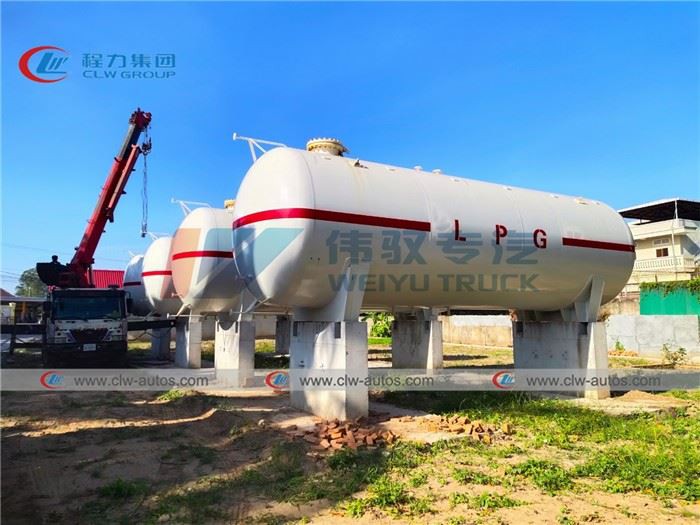
As a leading LPG storage tank supplier, we offer a wide range of high - quality storage tanks equipped with the latest and most reliable pressure relief devices. Our products are designed to meet the highest safety standards and are suitable for various applications.
For example, we have the Underground LPG Tank 50000liters 13000 Gallons. This tank is ideal for large - scale storage in areas where above - ground storage is not feasible. It is equipped with state - of - the - art pressure relief valves to ensure safe operation.
Another product in our portfolio is the 25tons Cooking Gas Tank LPG Storage Tank For Cambodia. This tank is specifically designed for the cooking gas industry in Cambodia, with pressure relief devices that are carefully selected to meet the local operating conditions.
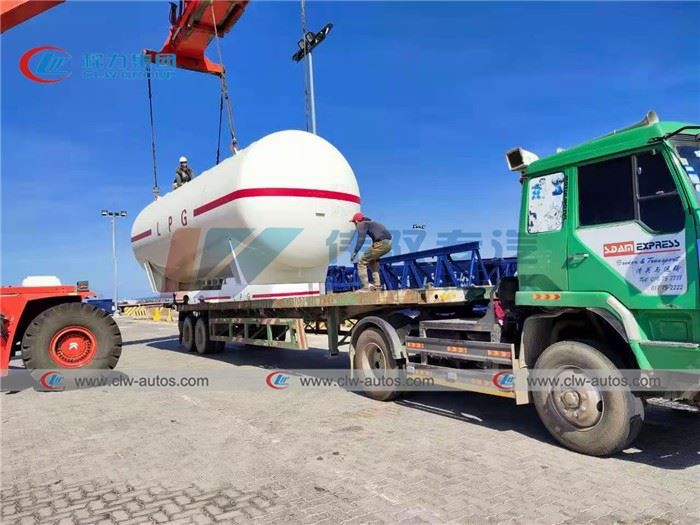
We also offer the 15CBM 7MT 8MT LPG Storage Tanker, which is suitable for transporting LPG. The tanker is fitted with a comprehensive pressure relief system, including pressure relief valves and rupture discs, to ensure the safety of the transportation process.
Contact Us for Procurement and Consultation
If you are in the market for high - quality LPG storage tanks with reliable pressure relief devices, we are here to help. Our team of experts can provide you with detailed information about our products, assist you in selecting the right tank and pressure relief device for your specific needs, and offer professional installation and after - sales services.
Whether you are a small - scale business or a large industrial enterprise, we have the solutions to meet your requirements. Contact us today to start a procurement discussion and take the first step towards a safe and efficient LPG storage system.
References
- API 520: Sizing, Selection, and Installation of Pressure - Relieving Devices in Refineries.
- ASME Boiler and Pressure Vessel Code, Section VIII: Rules for Construction of Pressure Vessels.
- NFPA 58: Liquefied Petroleum Gas Code.