


Monitoring fuel levels in fuel trucks during transportation is a critical aspect of the fuel supply chain. As a fuel truck supplier, I understand the importance of accurate and reliable fuel level monitoring. This not only ensures the safety of the transportation process but also helps in efficient inventory management and customer satisfaction.
Traditional Monitoring Methods
In the past, fuel level monitoring in fuel trucks was often a manual process. Drivers would use dipsticks to measure the fuel level in the tanks. This method, while simple, had several limitations. It was time - consuming, especially for large - capacity fuel trucks. Moreover, it was prone to human error. A driver might misread the measurement on the dipstick, leading to inaccurate information about the fuel level.
Another traditional approach was the use of float - type gauges. These gauges work based on the principle of buoyancy. A float is placed inside the fuel tank, and as the fuel level rises or falls, the float moves up or down. This movement is then translated into a reading on a gauge on the dashboard. While float - type gauges are more convenient than dipsticks, they also have their drawbacks. Over time, the float can get stuck or damaged, resulting in incorrect readings.
Modern Monitoring Technologies
With the advancement of technology, several modern methods have emerged for monitoring fuel levels in fuel trucks.
Ultrasonic Sensors
Ultrasonic sensors are widely used in fuel level monitoring. These sensors work by emitting ultrasonic waves into the fuel tank. The waves bounce off the surface of the fuel and return to the sensor. By measuring the time it takes for the waves to travel to the fuel surface and back, the sensor can calculate the distance from the sensor to the fuel surface. From this distance, the fuel level in the tank can be accurately determined.
One of the advantages of ultrasonic sensors is their non - contact nature. They do not come into direct contact with the fuel, which reduces the risk of damage due to corrosion or contamination. They are also highly accurate and can provide real - time data on the fuel level. However, they can be affected by factors such as temperature and the presence of air bubbles in the fuel.
Capacitive Sensors
Capacitive sensors are another popular choice for fuel level monitoring. These sensors work based on the principle of capacitance. The sensor consists of two electrodes, and when the fuel level changes, the capacitance between the electrodes also changes. This change in capacitance is then measured and converted into a fuel level reading.
Capacitive sensors are known for their high accuracy and reliability. They can work in a wide range of temperatures and are not affected by the presence of air bubbles in the fuel. They are also relatively easy to install and maintain. However, they can be more expensive than some other types of sensors.
Pressure Sensors
Pressure sensors can also be used to monitor fuel levels in fuel trucks. These sensors measure the pressure exerted by the fuel at the bottom of the tank. Since the pressure is directly proportional to the height of the fuel column, the fuel level can be calculated from the pressure reading.
Pressure sensors are simple and cost - effective. They are also robust and can withstand harsh environments. However, they require calibration to account for factors such as the density of the fuel and the shape of the tank.
Integration with Telematics Systems
In addition to using advanced sensors, modern fuel trucks often integrate fuel level monitoring systems with telematics systems. Telematics systems use GPS technology to track the location of the truck and can also transmit data on various parameters, including fuel level, to a central server.
This integration allows fleet managers to have real - time visibility of the fuel levels in all their trucks. They can monitor the fuel consumption of each truck, detect any abnormal fuel usage patterns, and plan refueling stops more efficiently. For example, if a truck is running low on fuel, the fleet manager can quickly identify the nearest fuel station and send the driver there.
Moreover, telematics systems can generate reports on fuel usage and performance. These reports can be used for analysis and decision - making. For instance, if a particular truck is consuming more fuel than others, the fleet manager can investigate the cause, such as engine problems or inefficient driving habits.
Importance of Accurate Fuel Level Monitoring
Accurate fuel level monitoring is crucial for several reasons.
Safety
First and foremost, it is essential for safety. Overfilling a fuel tank can lead to spills, which are not only a waste of fuel but also pose a significant environmental and safety hazard. On the other hand, running out of fuel during transportation can leave the truck stranded on the road, increasing the risk of accidents.
Inventory Management
Accurate fuel level monitoring helps in better inventory management. Fuel suppliers can keep track of the amount of fuel in each truck and plan their deliveries more effectively. This ensures that they have enough fuel to meet the demand of their customers without overstocking.
Cost Control
By monitoring fuel levels and consumption, fuel truck operators can control costs. They can identify any fuel theft or leakage, which can save a significant amount of money in the long run. Additionally, they can optimize their routes and driving habits based on fuel consumption data, reducing overall fuel costs.
Our Products and Their Monitoring Capabilities
As a fuel truck supplier, we offer a range of fuel trucks equipped with state - of - the - art fuel level monitoring systems. Our trucks are designed to meet the highest standards of safety and efficiency.
For example, our ISUZU Giga 22Meters Bucket Truck comes with an advanced ultrasonic fuel level monitoring system. This system provides accurate and real - time data on the fuel level, allowing drivers and fleet managers to make informed decisions.

Our 40000liters LPG Storage Tank is also equipped with a reliable capacitive fuel level sensor. This sensor ensures accurate monitoring of the LPG level, even in challenging conditions.
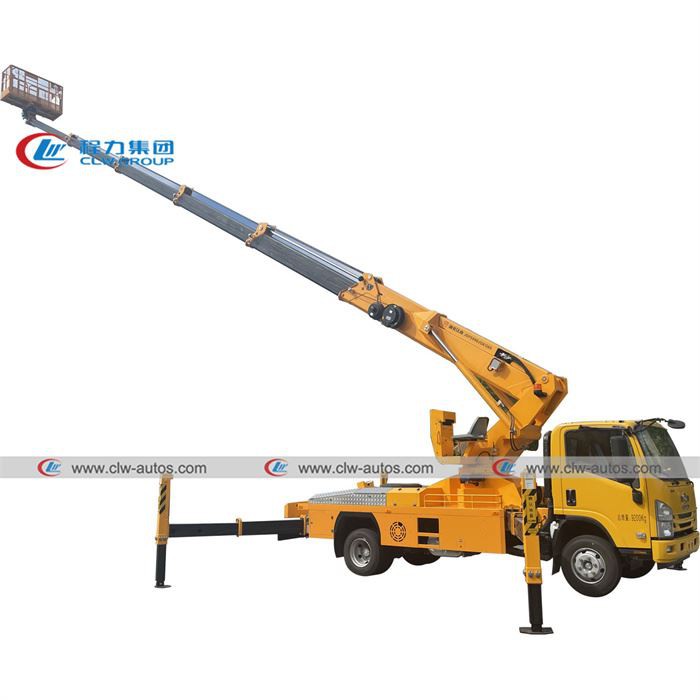
In addition, our Isuzu 29 - Meters Telescopic Arm Skylift Truck features a telematics - integrated fuel level monitoring system. This allows for seamless tracking of fuel levels and other parameters, enhancing the overall efficiency of the truck.
Contact for Purchase and Consultation
If you are in the market for fuel trucks with reliable fuel level monitoring capabilities, we would be more than happy to assist you. Whether you are a small - scale fuel distributor or a large - scale fleet operator, our products can meet your specific needs. Please feel free to contact us for more information and to discuss your requirements. We look forward to the opportunity to work with you and provide you with the best fuel truck solutions.
References
- "Fuel Level Sensors: Types and Applications" by Sensor Technology Magazine
- "Telematics in the Transportation Industry" by Transportation Research Journal
- "Safety and Efficiency in Fuel Truck Operations" by the National Fuel Supply Association