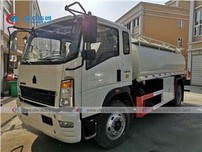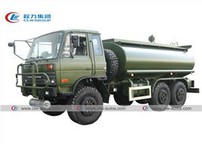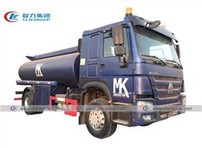
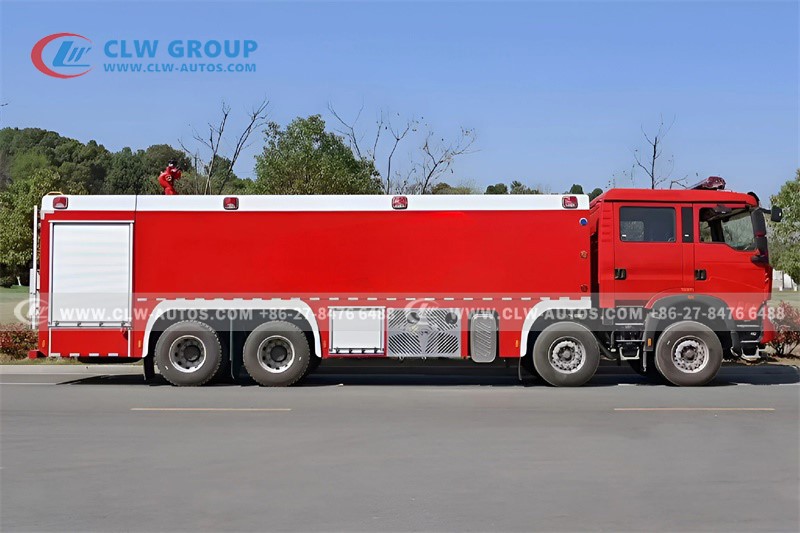
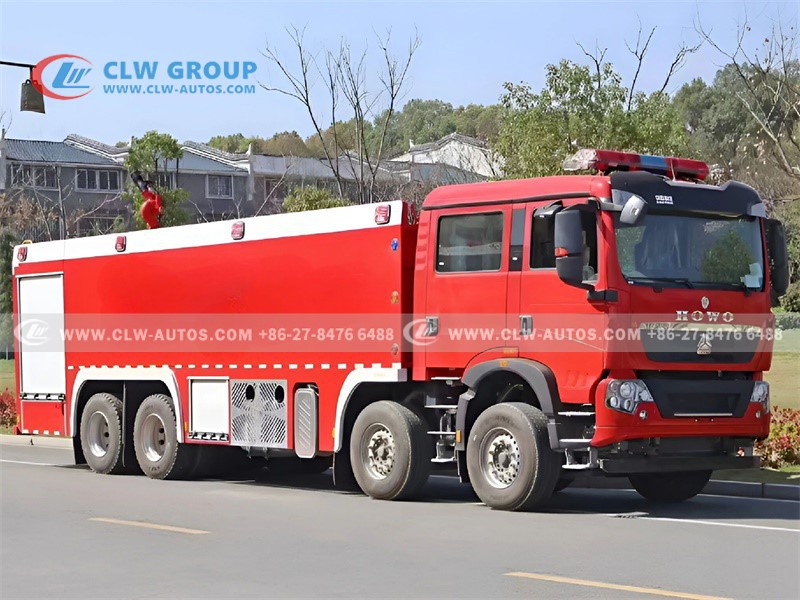
Chengli SINOTRUK HOWO CLW5420GXFPM250/HW 25-Ton Foam Fire Truck
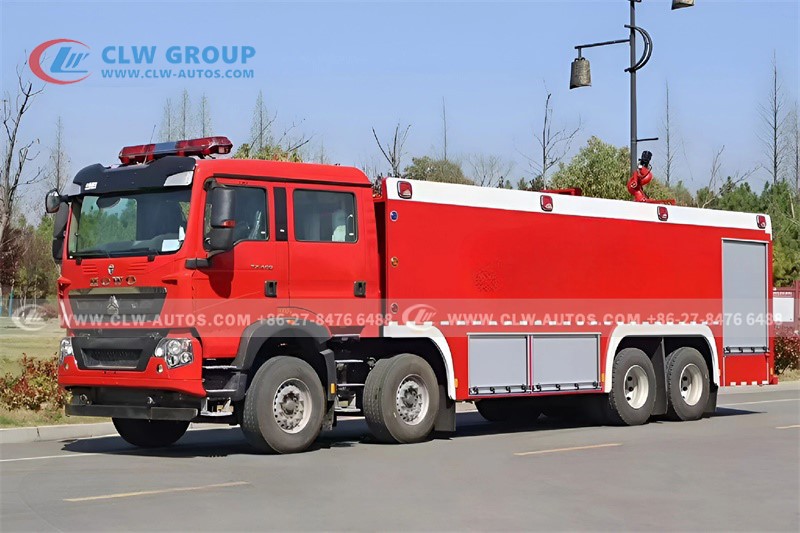
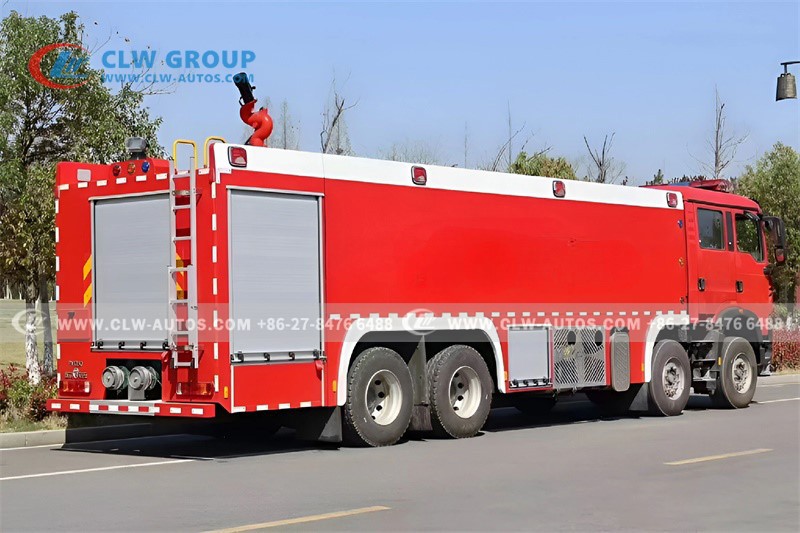
25t Foam Fire Truck Product Display Picture
Products Introduction
The foam fire truck is a special type of firefighting vehicle. Its dedicated components include a liquid tank, pump compartment, equipment box, power take-off and transmission system, piping system, and electrical system. The foam fire truck carries a dedicated license plate and is suitable for urban fire brigades, petrochemical enterprises, factories and mines, forestry, ports, and docks.
It is mainly used to extinguish flammable liquid fires such as petroleum and its products. By spraying foam over the burning surface, the truck isolates oxygen and effectively extinguishes the fire. The extinguishing principle is to cover the burning material with foam, forming an insulating layer that blocks heat transfer and oxygen supply, thus stopping combustion due to lack of oxygen.
Hubei Chengli Special Automobile Co., Ltd produces two types of foam fire trucks: one type does not carry an air compressor and is based on a water tank fire truck with additional foam tank and supporting equipment; the other type is a compressed air foam fire truck, which uses a compressed air foam system to fully mix water, foam concentrate, and compressed air. Compared with water tank fire trucks, foam fire trucks offer higher extinguishing efficiency, lower water consumption, environmental friendliness, and the ability to deliver firefighting agents over longer distances.
Fire Truck Chassis
Chassis Model: ZZ5447TXFV466MF5 (SINOTRUK Jinan Truck Co., Ltd.)
Engine Manufacturer: China National Heavy Duty Truck Group Co., Ltd.
Engine Model: MC11.46-61
Engine Power: 346 kW
Drive Type: Rear-wheel drive
Wheelbase: 1950 + 4600 + 1400 mm
Emission Standards: GB3847-2005, GB17691-2018 China VI Emission Standard
Fire Truck Cabin
Cabin Structure: Flat-head, original double-row four-door crew cab
Seating Arrangement: Front row seats 2 people; rear row seats 4 people.
A safety guardrail and handrail are installed in front of the seats, facilitating firefighters to safely and quickly don breathing apparatus en route to the fire scene and engage in firefighting upon arrival.
Tilting Mechanism: Equipped with a hydraulic tilting system.
Cabin Equipment: In addition to the standard equipment, the cab is equipped with a power take-off control switch, a 100W siren, and beacon light switches.
Exterior: Firefighting-specific warning lights are mounted on the front of the cab roof.
Fire Truck Tank
Approved Capacity:
- Water tank: 20.9 cubic meters
- Foam tank: 3.8 cubic meters
Material:
- Water tank: High-quality steel plate with advanced anti-corrosion treatment (optional 304 stainless steel)
- Foam tank: 304 stainless steel
Structure: Frame-welded construction with longitudinal and transverse anti-surge baffles inside the tank to effectively reduce impact forces during acceleration and braking. The front and rear end plates have trapezoidal ribs to ensure sufficient strength and rigidity. The top is equipped with manholes for maintenance. Anti-vortex devices and filters are installed to prevent swirling during suction and affecting flow. A stainless steel floating ball level gauge indicates the agent volume inside the tank and displays on the dashboard. The bottom is fitted with drain outlets with ball valves. The tank has two 76mm overflow pipes and four 76mm filling inlets (two on each side) to facilitate water supply from other vehicles.
Equipment:
- 2 manholes with quick-lock devices
- 2 level indicators
- 2 drain outlets with stainless steel ball valves
- 4 filling inlets (two per side)
Fire Pump and Piping System
Fire Pump: CB10/100 Low-pressure fire pump (Shanghai Rongshen)
Flow Rate: 100 L/s
Pressure: 1.0 MPa
Mounting Position: Rear-mounted
Vacuum Pump: Piston type, made of wear-resistant, corrosion-resistant material with required sealing performance.
Priming Time: ≤35 seconds
Suction Depth: ≥7 meters
Max Vacuum: ≥85 kPa
Suction Pipeline:
The pump is equipped with a Φ150 mm inlet, enabling water suction from natural sources, the onboard tank, or firefighting reservoirs. A conversion adapter can connect to hydrants. One Φ150 mm inlet with butterfly valve connects the water tank.
Discharge Pipeline:
One Φ100 mm discharge line and control valve to the roof-mounted water/foam monitor, using flexible couplings. Each side of the pump compartment has one Φ80 mm and one Φ65 mm manually controlled outlet.
Refill Pipeline:
One Φ65 mm pipeline and valve in the pump compartment for pumping water into the tank. Each side has two Φ65 mm refill pipes with internal coupling and caps.
Drainage Pipeline:
To protect the pump and valves, all pipelines are equipped with drainage lines and ball valves.
Cooling Pipeline:
A cooling circuit and control valve are installed to maintain the PTO under complex working conditions.
Fire Monitor
Model: PL8/80 Fire Monitor (Weisite)
Flow Rate: 80 L/s
Range: Water ≥70 m, Foam ≥65 m
Pressure: 1.0 MPa
Position: Mounted on the top of the water tank
Control: Manual control with locking mechanism, convenient operation
Power Take-off (PTO)
Type: Full-power sandwich-type PTO
Cooling: Forced water cooling
Lubrication: Splash lubrication
Operation: Operated from the dashboard inside the cab. PTO engagement is smooth and quiet.
Installation: Precisely matched and securely installed with the engine, preventing self-disengagement.
Chengli Fire Truck Pump Compartment
Materials: Frame and panels are high-quality carbon steel; inner panels are anodized aluminum plates.
Basic Structure:
- The pump compartment at the rear is fitted with lighting, making nighttime operations more convenient.
- The rear contains the fire pump and control system, with dedicated instrument panels and controls. The compartment is equipped with lockable aluminum roller shutters.
- The front holds the water tank, while the rear houses the pump and equipment boxes.
Roller Shutter Doors:
- Each compartment is equipped with lighting, controlled by the roller door opening/closing.
- Rivets in the side guides prevent dislodgement.
- The pump room uses lockable roller doors. Handles and locks are strong and durable. The special roller shutters save space, avoid obstruction, and their sealing performance has passed water spray tests to ensure no leakage.
- The rear has one roller door on each side and one on the back. Safe, reliable, and attractive.
Electrical System
- A red long-row luxury warning light is installed on the roof.
- The siren power is 100W.
- All wiring uses integrated harnesses with waterproof connectors to ensure safe operation.
- The pump room dashboard displays level gauges, tachometer, pressure gauge, vacuum gauge, and lighting controls.
- Safety marker lights are mounted on both sides and the rear reflective markings comply with standards.
- All compartments are equipped with LED lighting for nighttime operations.
- One fire scene floodlight is mounted on the roof.
- Sirens, beacons, strobe lights, and circuits are independent auxiliary circuits controlled inside the cab.
- Each side is equipped with four strobe and side floodlights (combined), lower safety lights, and combination reflectors. Position lamps, turn indicators, and interior lighting are installed as standard.
- All wiring is protected in sleeves, and different colors distinguish their functions.
Dashboard and Equipment
- The instrument panel is located in the rear pump compartment and equipped with a control board and ample lighting.
- All controls, switches, and indicators have Chinese labels.
- Operating instructions are clearly displayed.
- All nameplates are durable and weather-resistant.
- The control panel uses high-quality aluminum, attractive, durable, and lightweight.
- The rear-mounted pump operating system has no pressurized outlets, ensuring operator safety. A panel light is provided.
Precautions for Use
Startup and Operation:
- After starting the pump, check the motor current and pump operation. Stop immediately if any abnormalities occur.
- Observe the outlet pressure gauge. When the pointer reaches rated pressure and stabilizes, gradually open the outlet valve to keep the pump running at rated conditions.
- Once water supply is normal, set the vacuum clutch lever to the "disengage" position. Keep clean water circuit pressure at approx. 0.8 MPa and foam circuit at 1.0 MPa. Adjust outlet and return valves as necessary.
- Regularly check pump and motor bearing temperatures (max 75°C) and motor current.
Firefighting Operation:
- Position the rear or side of the truck facing the fire scene.
- Quickly start water discharge and gradually increase pressure (≥0.686 MPa when using PQ8 nozzle; ≥0.785 MPa when using roof monitor).
- Open the water outlet valve, then the foam outlet ball valve. Adjust the mixer to the correct setting and aim foam at the flames.
- The driver must remain at the controls, monitor foam concentrate levels, and replenish in time to avoid interrupting firefighting.
Maintenance:
- Regularly check bearing temperatures and motor current.
- After shutdown, reset all valves as shown on the schematic.
- For combined foam-dry powder trucks, check dry powder regularly for caking. Prevent debris contamination during refilling. Every five years, perform a pressure and tightness test on the dry powder tank. Hold pressure for 3 minutes without pressure loss, leakage, or abnormalities.
we are here for you