


LPG, or liquefied petroleum gas, is a widely used energy source in various sectors, including residential, commercial, and industrial. As a leading LPG storage tank supplier, we understand the critical importance of safety when it comes to storing this flammable and potentially hazardous substance. In this blog post, we will delve into the safety devices installed on LPG storage tanks to ensure the well - being of people and property.
Pressure Relief Valves
One of the most crucial safety devices on an LPG storage tank is the pressure relief valve. LPG is stored in a liquid state under pressure. However, various factors such as temperature changes can cause the pressure inside the tank to increase. If the pressure exceeds the safe limit, it can lead to a catastrophic failure of the tank.
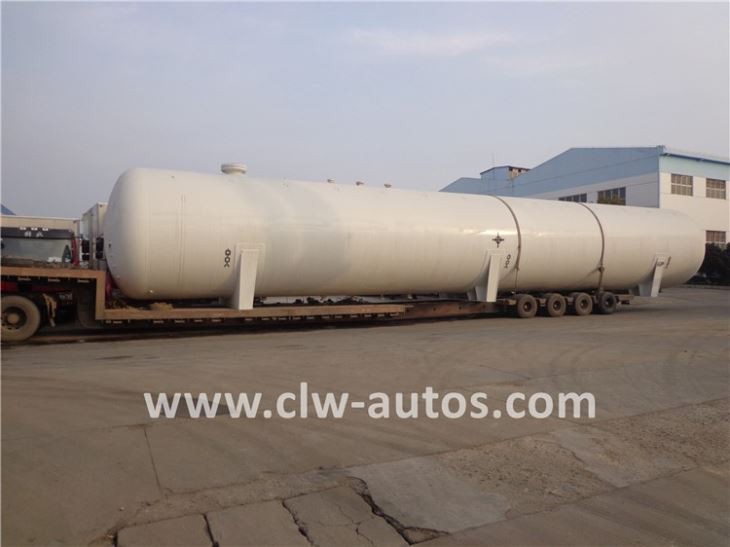
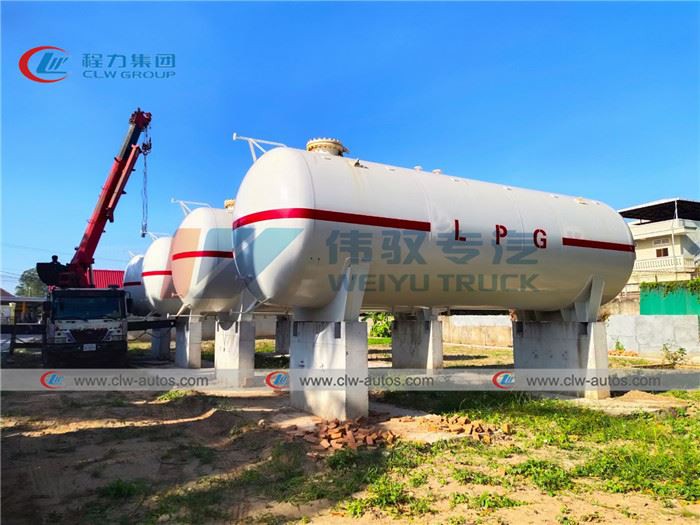
Pressure relief valves are designed to open automatically when the pressure inside the tank reaches a pre - set value. They allow the excess gas to escape in a controlled manner, thereby reducing the pressure inside the tank. This prevents the tank from rupturing due to over - pressurization. These valves are regularly tested and maintained to ensure their proper functioning. For example, in our 25tons Cooking Gas Tank LPG Storage Tank For Cambodia, high - quality pressure relief valves are installed to guarantee the safety of the stored LPG.
Level Indicators
Accurately knowing the level of LPG in the storage tank is essential for safety and operational reasons. Level indicators provide real - time information about the amount of LPG present in the tank. There are different types of level indicators, such as float - type indicators and ultrasonic indicators.
Float - type indicators work on the principle of buoyancy. A float inside the tank rises or falls with the level of the LPG, and this movement is translated into a visual or digital reading. Ultrasonic indicators, on the other hand, use ultrasonic waves to measure the distance between the sensor and the surface of the LPG. This technology provides a more accurate and non - intrusive way of measuring the level.
Proper level monitoring helps prevent over - filling of the tank. Over - filling can cause the pressure to rise rapidly and may lead to valve malfunction or even tank failure. Our Asme Standard LPG Storage Tank is equipped with advanced level indicators to ensure that the tank is always operated within safe limits.
Temperature Sensors
Temperature plays a significant role in the safety of LPG storage. As the temperature increases, the pressure inside the tank also rises. High temperatures can also affect the integrity of the tank material over time. Temperature sensors are installed on LPG storage tanks to continuously monitor the temperature of the LPG and the tank itself.
If the temperature exceeds a certain threshold, an alarm can be triggered, alerting the operators. In some cases, cooling systems can be activated automatically to bring the temperature down. For instance, in large - scale industrial applications where the LPG storage tanks are exposed to harsh environmental conditions, temperature sensors are vital for preventing dangerous situations. Our Underground LPG Tank 50000liters 13000 Gallons is designed with reliable temperature sensors to ensure safe underground storage, where temperature variations can be significant.
Emergency Shut - off Valves
Emergency shut - off valves are essential safety devices that can quickly stop the flow of LPG in case of an emergency. These valves can be manually or automatically operated. In the event of a fire, a leak, or any other dangerous situation, the emergency shut - off valve can be closed to prevent further release of LPG.
Automatic shut - off valves can be connected to various sensors, such as fire sensors or pressure sensors. When a dangerous condition is detected, the valve closes immediately. Manual shut - off valves are also provided for operators to take action in case of an emergency. These valves are strategically placed on the tank and its associated piping systems to ensure effective isolation of the LPG source.
Flame Arrestors
Flame arrestors are installed on the vents of LPG storage tanks. Their primary function is to prevent the propagation of flames into the tank in case of an external fire or explosion. They work by dissipating the heat and quenching the flame before it can reach the flammable LPG inside the tank.
Flame arrestors consist of a series of small passages or elements that create a large surface area. When a flame tries to pass through these passages, the heat is transferred to the walls of the passages, and the flame is extinguished. Regular inspection and maintenance of flame arrestors are necessary to ensure their effectiveness.
Leak Detection Systems
LPG leaks can be extremely dangerous as LPG is flammable and can form explosive mixtures with air. Leak detection systems are installed on LPG storage tanks to detect even the smallest leaks. These systems can use various technologies, such as gas sensors and infrared detectors.
Gas sensors can detect the presence of LPG in the surrounding air. Once a leak is detected, an alarm is triggered, and the appropriate actions can be taken, such as shutting off the supply and evacuating the area. Infrared detectors work by detecting the absorption of infrared light by LPG molecules. They are highly sensitive and can detect leaks from a distance.
Overfill Prevention Devices
Overfill prevention devices are crucial for ensuring that LPG storage tanks are not filled beyond their safe capacity. These devices can be mechanical or electronic. Mechanical overfill prevention devices typically use a float mechanism that closes the filling valve when the tank reaches a certain level.
Electronic overfill prevention devices use sensors to monitor the level and send a signal to the filling system to stop the flow of LPG when the maximum level is reached. These devices provide an additional layer of safety and help prevent accidents caused by over - filling.
Corrosion Protection Systems
LPG storage tanks are often exposed to harsh environmental conditions, which can cause corrosion. Corrosion can weaken the tank structure over time and lead to leaks or failures. To prevent corrosion, various protection systems are used.
One common method is the use of coatings. Specialized coatings are applied to the inner and outer surfaces of the tank to protect it from corrosion. Cathodic protection is another effective method. It involves the use of sacrificial anodes or impressed current systems to prevent the tank from corroding. Regular inspection and maintenance of the corrosion protection systems are necessary to ensure their long - term effectiveness.
Conclusion
As an LPG storage tank supplier, we are committed to providing high - quality tanks with state - of the - art safety devices. The safety devices mentioned above are just some of the many measures we take to ensure the safe storage of LPG. Each device plays a crucial role in preventing accidents and protecting lives and property.
If you are in the market for a reliable LPG storage tank, we invite you to contact us for a detailed discussion about your specific requirements. Our team of experts is ready to assist you in choosing the right tank and ensuring that all safety measures are in place.
References
- API Standard 620: Design and Construction of Large, Welded, Low - Pressure Storage Tanks.
- NFPA 58: Liquefied Petroleum Gas Code.
- ASME Boiler and Pressure Vessel Code.